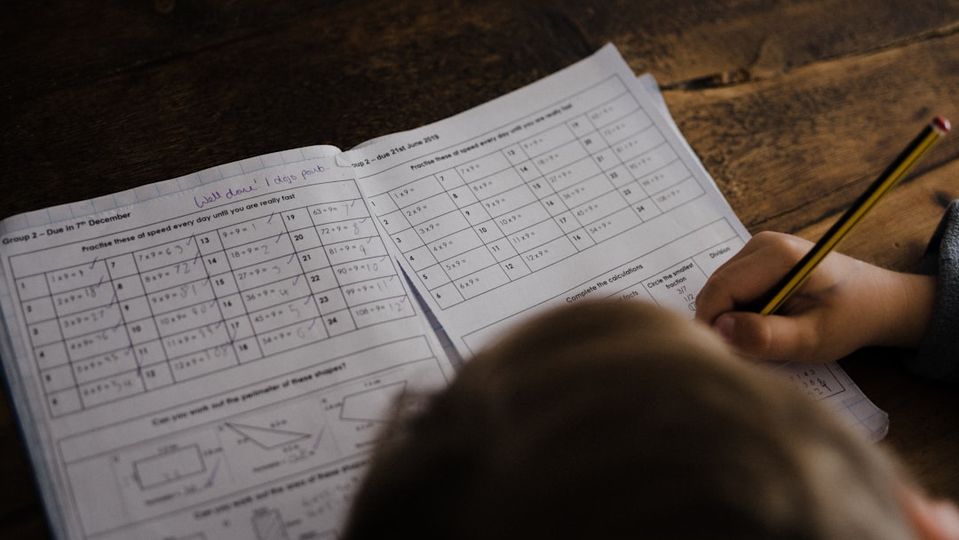
Parents might see “GCF” on their children’s math homework and wonder if it’s a new “text speak” term, similar to “LOL” or “OMG,” used in texts. Or, they might think a GCF is some sort of undesirable food additive. So, if you don’t remember what a GCF is from your own grade-school days, here is your refresher course. Pay close attention, because if you need to offer 5th grade math help with GCFs, you should understand them, too.
What Is a GCF?
GCF is short for Greatest Common Factor. A factor is simply a number that can be multiplied with another to get the answer—the product. When comparing two products, common factors are those numbers that appear in both factor lists. The GCF (sometimes also called the greatest common divisor) is the greatest of these factors. For example, let’s start with the numbers 18 and 24:
- The factors of 18 are 1, 2, 3, 6, 9, and 18 (1×18=18, 2×9=18, and 3×6=18).
- The factors of 24 are 1, 2, 3, 4, 6, 8, 12, and 24 (1×24=24, 2×12=24, 3×8=24, and 4×6=24).
- The common factors are 1, 2, 3, and 6.
- Therefore, the greatest common factor is 6.
- Greatest common factors are often notated as such: GCF (18, 24) = 6.
Got it?
Why Are GCFs Important?
The greatest common factors are essential when working with fractions. Not every group of fractions will conveniently feature the same denominator, and GCFs can help simplify them. This topic of the math curriculum becomes even more essential in algebra when polynomials that use fractions are introduced.
Learning Your GCFs
Parents looking for 5th grade math help with GCFs can turn to an online tutoring program if their child is really struggling with this or other math concepts. If you are simply looking for some enrichment that will give your kids a GCF boost, here are some activities you can work on in the car or at home: